The market reality: why the "old way" is broken
The global landscape for email has fundamentally shifted. In 2024, the "Big Three" (Google, Microsoft, and Yahoo) implemented the most stringent regulations in the history of digital communication. For recruiting organizations, the "old way" of high-volume, unmonitored outreach is no longer just ineffective, it is a liability.
In the current environment, your email success is no longer governed by your software, but by your Domain Reputation.
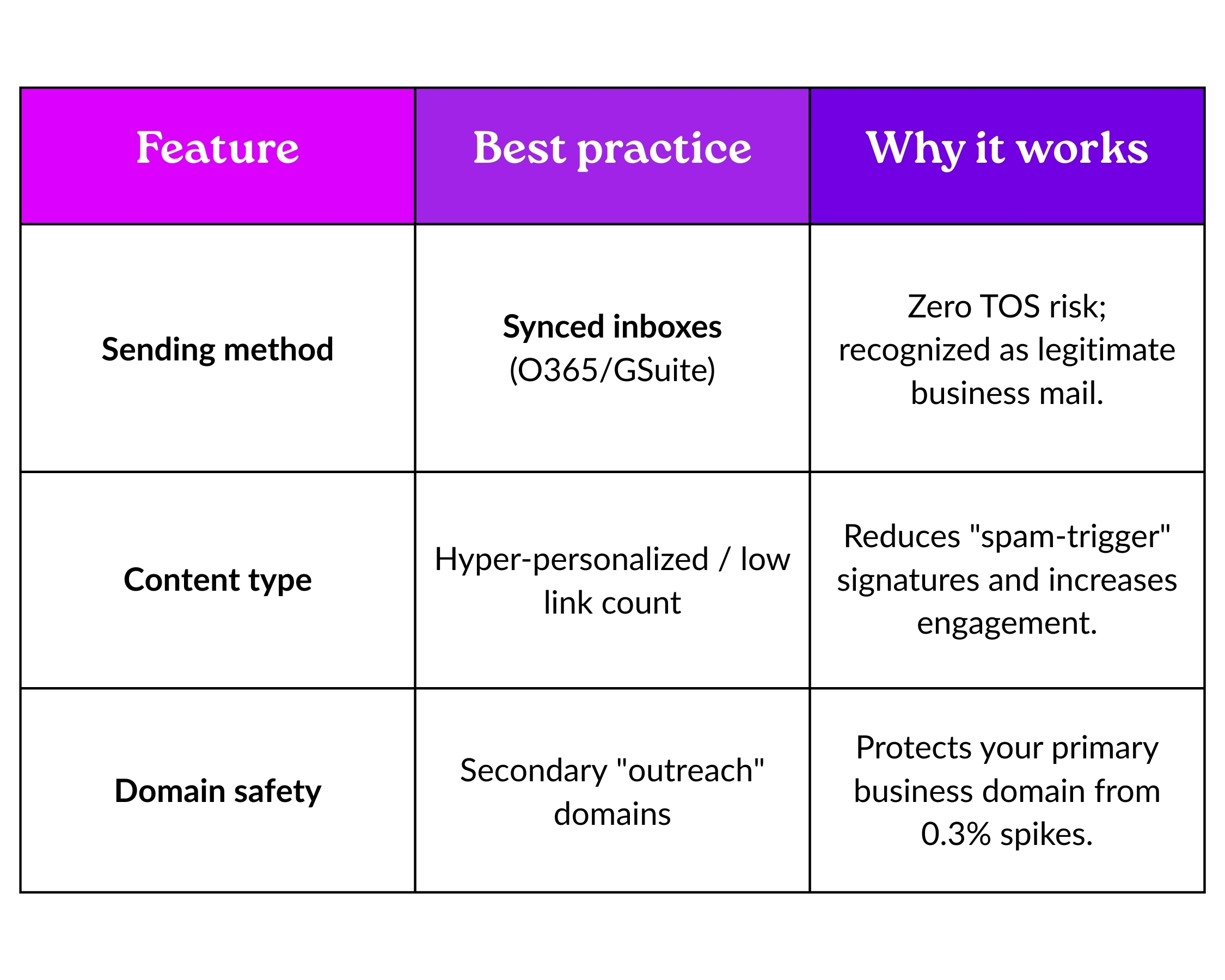
- The 0.3% rule: If more than 3 out of every 1,000 recipients mark your emails as spam, Google and Microsoft will effectively "blackball" your entire company domain.
- The "double opt-in" mandate: Traditional Email Service Providers (ESPs) like Mailgun or SendGrid now strictly require double opt-in consent. Cold outreach technically violates their Terms of Service, creating a legal and operational risk where accounts can be deactivated without warning.
- Shared reputation risk: Using high-volume ESPs for cold outreach often places you on "bottom-tier" IP addresses with other high-risk senders, ensuring your emails land in spam before they are even read.
What kills email deliverability
Email deliverability isn’t subjective. Inbox providers don’t evaluate intent — they evaluate behavior and signals at scale. Even well-meaning recruiters can unknowingly damage their domain reputation by following outdated outreach practices.
Below are the most common behaviors that trigger deliverability penalties and push senders into lower-reputation tiers.
- High-volume sending from a single inbox: Sending hundreds or thousands of emails per month from one inbox is one of the fastest ways to get flagged. Even strong content can’t overcome unnatural volume patterns that don’t resemble human behavior.
- Low engagement signals: Inbox providers track how recipients interact with your emails. Low open rates, no replies, and frequent deletes without engagement signal that messages are unwanted — regardless of intent.
- Spam complaints: It only takes a handful of recipients clicking “Mark as Spam” to cross the 0.3% threshold. Once that happens, reputation damage compounds quickly.
- Link-heavy or template-driven content: Emails packed with links, tracking pixels, or repetitive templates create recognizable “spam signatures,” especially when sent at scale.
- Poor list hygiene: Outdated, scraped, or unverified contact data leads to bounces, dead inboxes, and disengaged recipients — all negative signals.
- Ignoring sending safeguards: Disabling pacing controls, ramp-up periods, or safety limits to “go faster” may increase short-term volume, but it almost always results in long-term deliverability loss.
Senders exhibiting these behaviors are automatically classified into lower-reputation tiers, where inbox providers apply stricter filtering and throttling.
Most recruiters don’t intend to spam. But inbox providers don’t care why an email was sent — only how it behaves once it lands. Deliverability isn’t about sending more. It’s about sending in a way that inbox providers trust.
Email deliverability at Loxo
Loxo has re-engineered our infrastructure to thrive within these regulations. While other providers struggle with mass-blocking, Loxo users benefit from a system built for precision.
- Native inbox syncing: Unlike many providers, Loxo prioritizes synced inboxes (O365/GSuite). This approach mirrors true human-to-human sending, which is the gold standard for email deliverability. Customers who use synced inboxes consistently see the strongest inbox placement, which is why Loxo strongly recommends this method.
- Dynamic reputation protection: For those who prefer using our ESP integrations, we manage a "Golden Tier" of IP addresses. We dynamically move customers between tiers based on real-time performance to ensure our best senders are never punished for the actions of others.
- Intelligent pacing: Our system includes built-in "safety brakes." We automatically pace your sending to ensure you stay out from under the magnifying glass of the major providers.
Ensure your deliverability
To guarantee the highest deliverability in the industry, we recommend the multi-channel/multi-inbox strategy:
Our standards
The average email deliverability for outreach tools generally sits around 83%–85% globally. Loxo consistently maintains higher deliverability than that average for customers following recommended sending practices. Loxo isn’t just an outreach tool, it’s the system that supports your entire recruiting workflow, end to end. And because long-term success matters more than short-term volume, Loxo holds a firm line on these standards:
- Loxo will always favor a “slower” send that protects sender reputation over a “fast” send that increases spam risk.
- Loxo provides clear deliverability signals so if rates dip, Loxo can usually diagnose what changed and what to adjust.
Our promise
Email deliverability keeps getting harder, and recruiters feel it first. Loxo doesn’t pretend there’s a magic switch that guarantees inbox placement when filters and regulations continue to get more strict. Instead, Loxo is built to give recruiting teams the most reliable, compliant path to consistent outreach at scale.
When recruiters follow the guidance of Loxo and send through synced inboxes, less time goes to fighting spam folders and blocklists and more time goes to the work that actually drives placements.