
Longlist Agent
Your best recruiter's longlist.
Every search, methodical.
Methodical candidate longlisting — career trajectory, org fit, recency, signal quality — applied at machine scale, and roughly 1/30th the cost of doing it by hand.
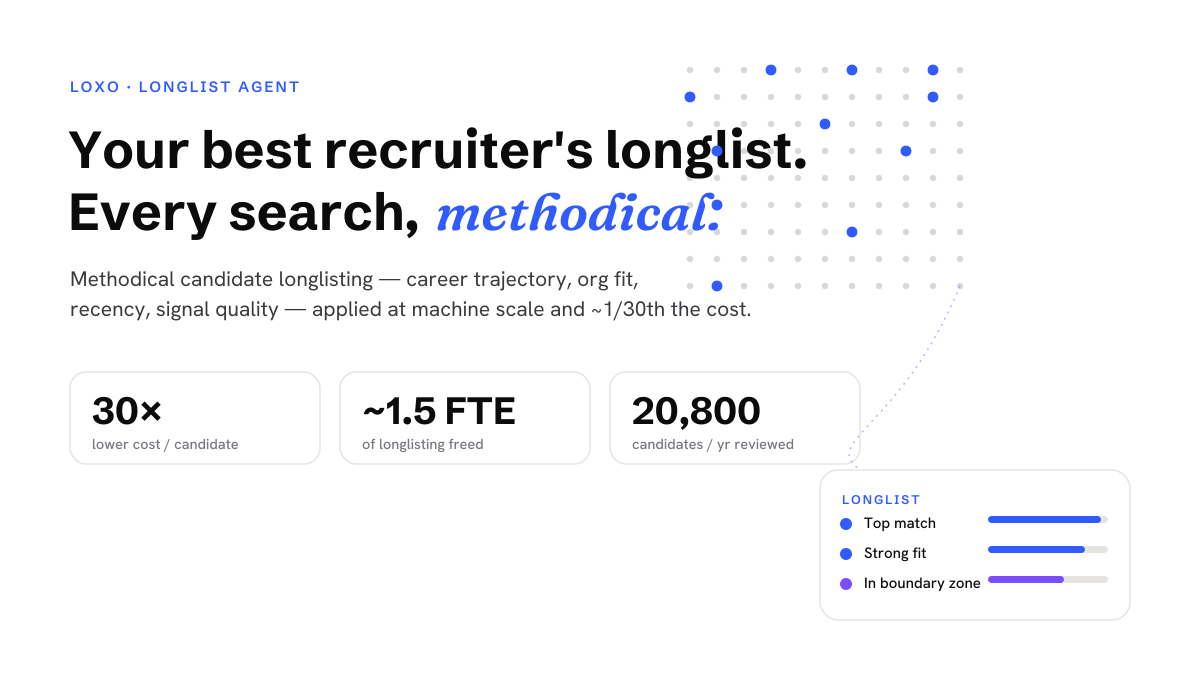
The longlisting math, in four numbers
The hidden cost
Methodical longlisting is slow — by design
Done right, a longlist isn't keyword-matching. It's reading career trajectory, judging org and culture fit, checking recency and location nuance, and forming a defensible call on every candidate. That's real cognitive work — about 12–13 minutes of recruiter time for each candidate that makes the list, once you count the ones reviewed and ruled out to find them. The result: 4–6 longlisted per focused hour, and 50–80 per week for a standard role.
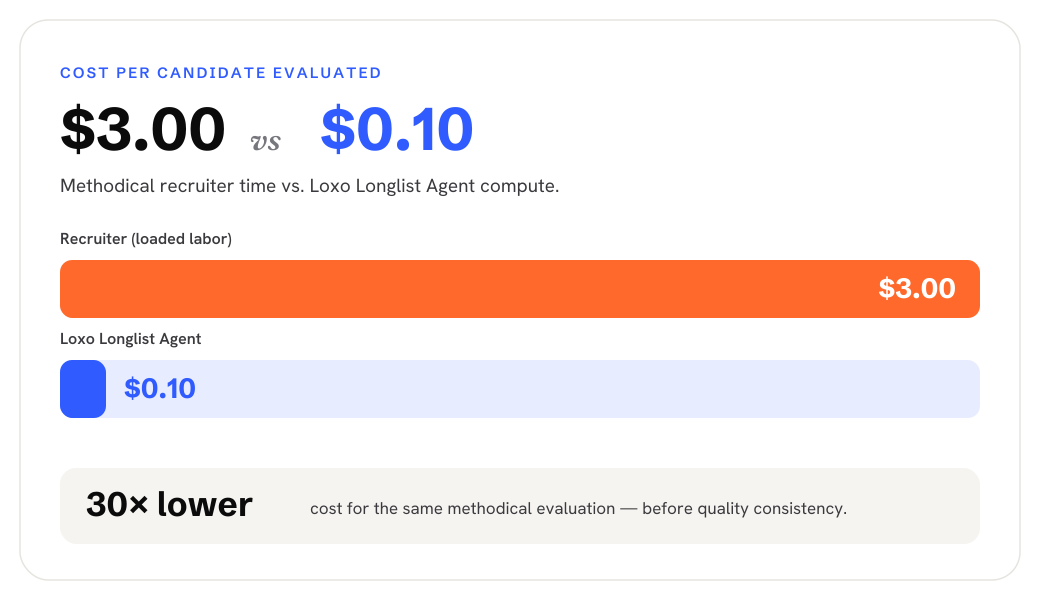
The agent applies the same evaluation rubric to candidate #487 as it did to candidate #1 — no fatigue, no 4 p.m.-on-Friday shortcuts. The cost advantage only counts because the quality is held constant.
At scale
What 20 open reqs cost in a year
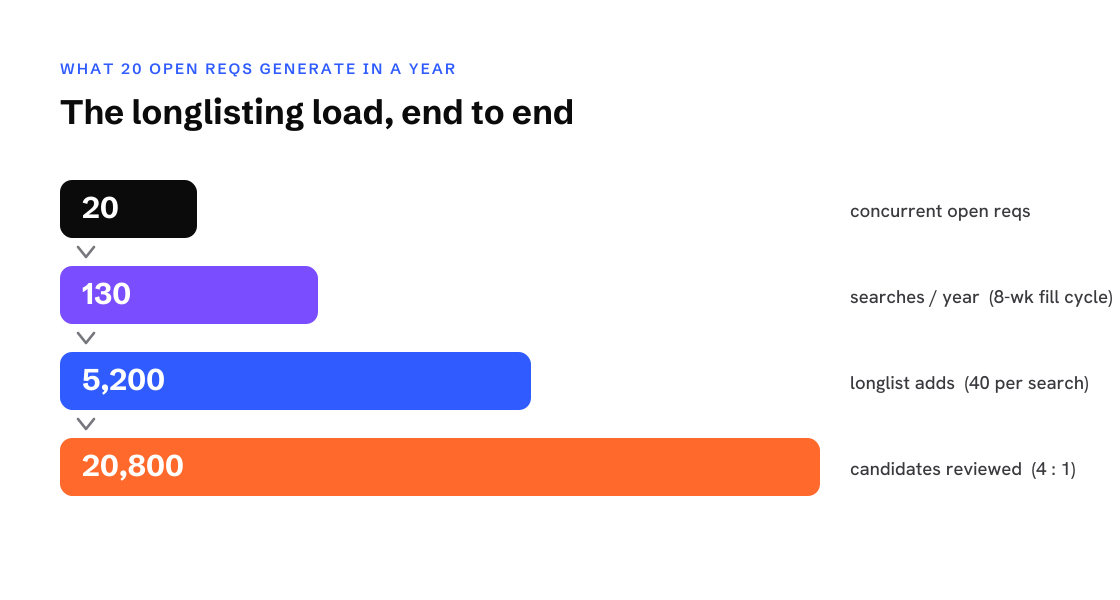
A desk carrying 20 concurrent searches cycles through about 130 searches a year. Translate that into longlisting volume and the labor adds up fast.
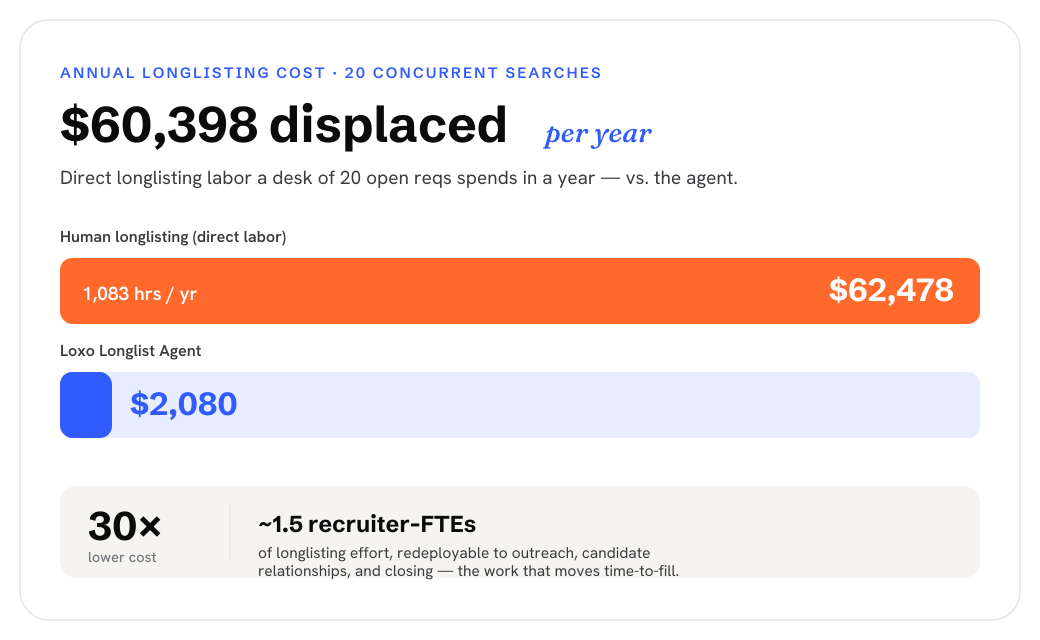
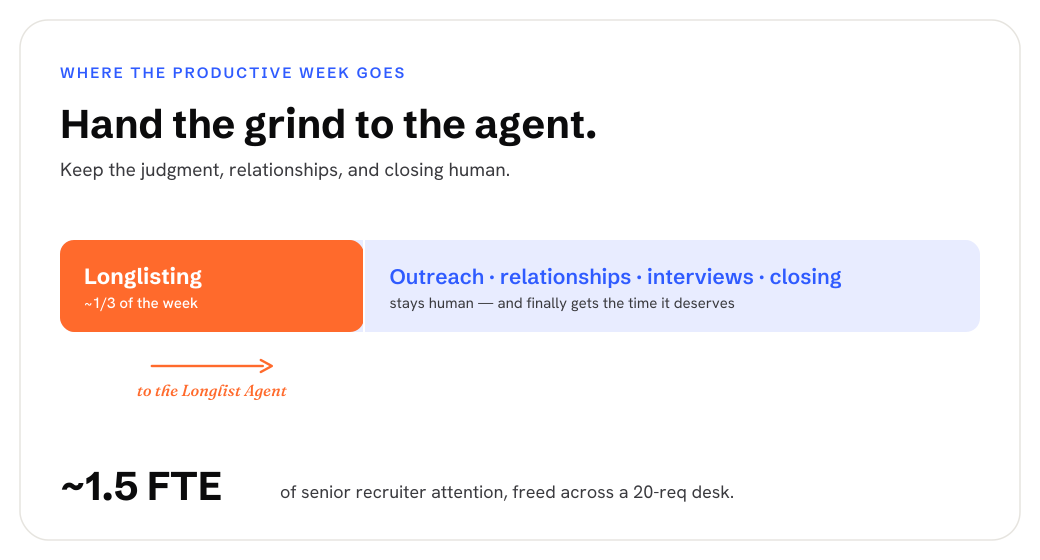
That's roughly 1,083 hours of recruiter labor a year spent on longlisting alone — about 1.5 full-time-equivalents. The agent covers the same ~20,800-candidate review volume for about $2,080.
The real win
Capacity, not headcount
This isn't about cutting recruiters — it's about giving them back the third of their week the grind quietly eats. Hand longlisting to the agent and that attention flows to outreach, candidate relationships, and closing: the work that actually moves time-to-fill.
Two honest framings: the conservative figure values longlisting hours at the loaded hourly rate; the larger figure assumes that freed time converts to redeployed FTEs. Cost efficiency (~30×) and raw throughput are separate axes — Loxo never blends them into one inflated multiple.
How it works
A recall gate, then a precision pass
The Longlist Agent is the completeness stage of Loxo's hiring pipeline — built to surface every plausible candidate before a separate Shortlist Agent applies precision.
Structured requirement
Each search starts from a structured role definition — core, adjacent, and bonus competencies across depth tiers — not a keyword string.
The longlist
The agent evaluates the talent graph, applicants, and CRM against that rubric at ~$0.10 per candidate, with a transparent threshold and a reviewable boundary zone.
The shortlist
Survivors flow to the Shortlist Agent's multi-dimension evaluation. Deterministic features compute the scores; language models only write the narrative.
Auditable by design
Orthogonal scoring axes, deterministic pipelines, and explanations that never invent the number — designed with the EU AI Act and NYC Local Law 144 in mind.
Side by side
Methodical recruiter vs. Longlist Agent
| Dimension | Methodical recruiter | Loxo Longlist Agent |
|---|---|---|
| Longlisted per week (one role) | 50–80 (standard) · 25–40 (exec search) | The same volume in minutes of wall-clock |
| Cost per candidate evaluated | ~$3.00 (loaded labor) | ~$0.10 |
| Rubric consistency | Varies by recruiter, time of day, fatigue | Identical rubric on every candidate |
| Annual cost · 20 reqs | ~$62,000 · ~1.5 FTE | ~$2,080 |
| What it frees | — | ~1.5 FTE for outreach & closing |
FAQ
Questions recruiting leaders ask
How many candidates can a recruiter longlist in a week?
A recruiter doing methodical longlisting — evaluating career trajectory, org fit, recency, and signal quality rather than keyword-matching — genuinely longlists roughly 50–80 candidates per week for a standard role, and 25–40 for executive or retained search. That's about 4–6 per focused hour, because each candidate that makes the list costs ~12–13 minutes of recruiter time once you include the candidates reviewed and ruled out to find them.
What does longlisting cost per candidate?
Valued at a fully loaded recruiter cost, methodical evaluation runs about $3.00 per candidate reviewed. The Loxo Longlist Agent evaluates a candidate for roughly $0.10 — about 30× lower for the same rubric, before accounting for quality consistency.
How much does longlisting cost across 20 open reqs in a year?
A desk carrying 20 concurrent searches cycles through ~130 searches a year, about 5,200 longlist additions and 20,800 candidates reviewed — roughly 1,083 hours of recruiter labor, about 1.5 FTE and ~$62,000 in direct labor. The agent covers the same review volume for about $2,080 per year.
Does the Longlist Agent replace recruiters?
No. It displaces the longlisting task, not the recruiter. The ~1.5 FTE of effort it absorbs is redeployed to outreach, candidate relationships, and closing — the work that actually moves time-to-fill.
Is automated longlisting as accurate as a careful human?
The Longlist Agent is built to match a methodical recruiter, not a keyword filter. It runs deterministic feature pipelines and applies a fixed, multi-dimension rubric uniformly to every candidate. Language models write the explanations; they never compute the scores or rankings.
See your own longlisting math
Run the numbers on your desk, or watch the Longlist Agent work a live search.
Methodology & assumptions
- Per-candidate model: ~5 min per serious evaluation, ~2.5 min per reject, at a 4:1 reviewed-to-longlisted ratio → ~12.5 min per longlist add.
- Recruiter cost: $120,000 fully loaded ($57.69/hr over 2,080 hrs). Productive review time taken as ~15 hrs/week.
- Annual model: 20 concurrent reqs, 8-week time-to-fill, 40-candidate longlist per search, agent at $0.10/candidate.
- Cost efficiency (~30×) and wall-clock throughput are reported as separate axes and never combined into a single figure.


