
Job Description & Skills DNA Agent
Build every search on a foundation you can actually trust
Loxo's Job Description & Skills DNA Agent builds the structured role intelligence behind the job description first — so search, matching, scorecards, and submittals all run from a single, accurate source of truth instead of an incomplete, untrustworthy document.
Trusted by 125,000+ recruiters around the globe

Leader
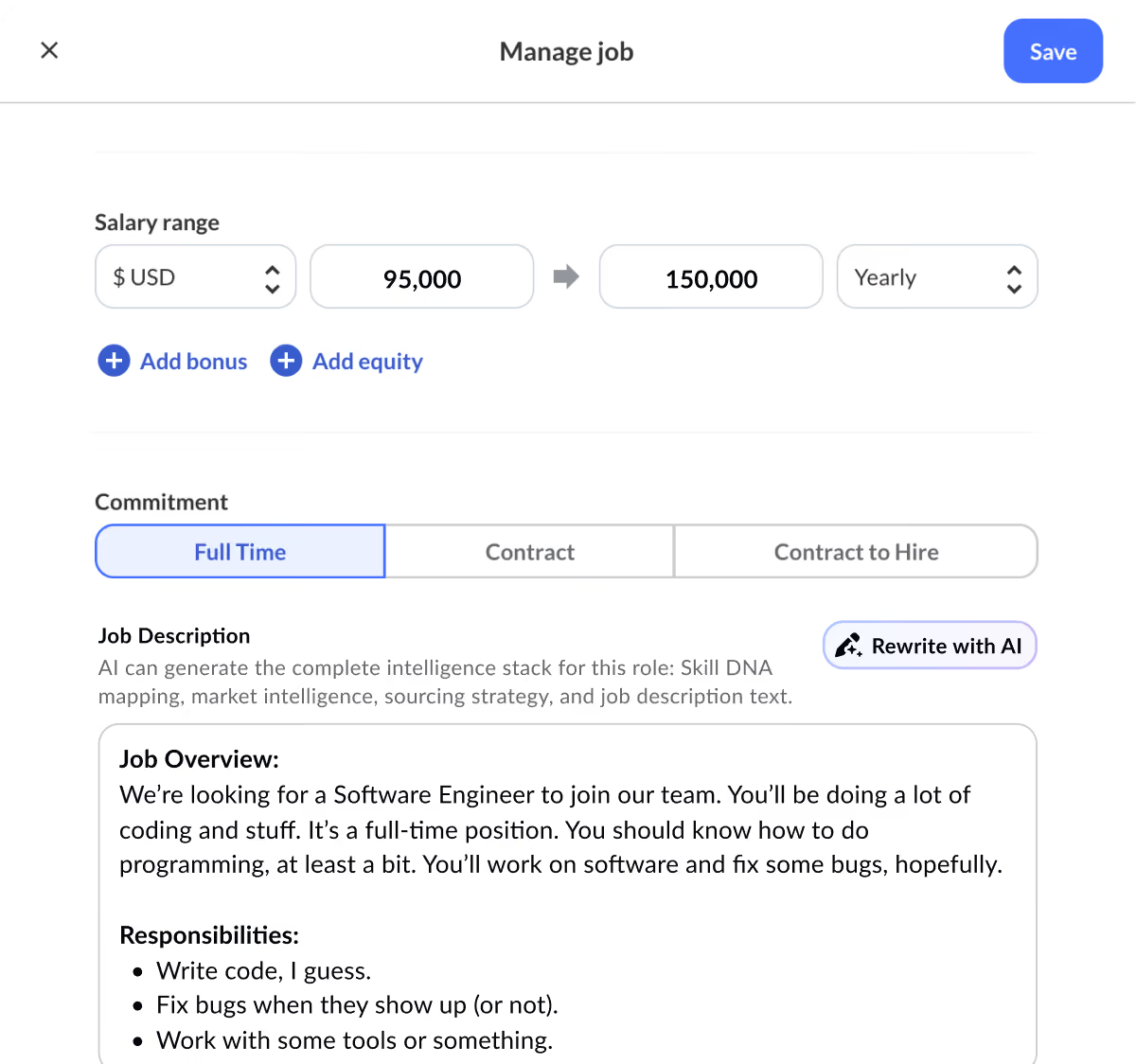

Your search is only as good as what it's built on...
Yet every day, recruiters are running precision processes on top of imprecise foundations:
One source of truth across the entire job workflow
Because every part of Loxo leverages the same Skills DNA, search, matching, scorecards, and candidate submissions all stay aligned — and recruiter intent doesn't get diluted or reinterpreted like a bad game of Telephone at every downstream step.
Catch misalignment before it costs you
The Job Description & Skills DNA Agent is not built to simply make job descriptions faster to write (though it does do that, too). It was designed to make the foundation of your recruitment efforts more trustworthy. Instead of discovering a brief was off after a shortlist comes back wrong, you see that misalignment upfront — before the search is already in motion.

Frequently Asked Questions
Yes, but the difference is that they stop at text. Once that text exists, most systems are still trying to interpret it or break it into keywords to power search and matching. In Loxo, matching isn't based on the job description at all — it's based on Skills DNA, a structured role definition that exists before any job description prose is generated.
Further, a prompt gives you a single generated output that doesn't persist beyond that moment. Skills DNA becomes the foundation for everything else in the workflow — reusable, editable, and continuously improved as role definitions evolve. Every downstream system reads from it directly!
Yes, and that's expected. When a recruiter pastes a job description, the system doesn't rely on it as-is; it automatically converts it into Skills DNA through reverse extraction — so the structured foundation is always created, even when the original input is messy, incomplete, or inconsistent.
That mismatch is one of the most common problems in recruitment. With Loxo’s Job Description and Skills DNA Agent, both the job description and intake conversation get translated into Skills DNA, which makes differences visible — and therefore resolvable — before a search goes sideways.
No. LLMs are used to generate language, but structured fields like requirements, compensation, and compliance language come from controlled sources — recruiter input, market data that's clearly labeled as estimated, and customer configuration.
Matching and scoring are deterministic and explainable — every output can be traced back to the underlying structured criteria. The Skills DNA defines the role, and evaluation logic operates separately with explicit rules. That separation is intentional, and it's what keeps the system auditable.
No — like we said, real recruiter judgement is invaluable and irreplaceable. Intake is still where the real expertise lives. What the Job Description and Skills DNA Agent does is capture the output of that conversation in a structured way so it isn't lost or reinterpreted at every downstream step.
Ready to shape the future?
Your job is placing the best talent in the roles that will define their careers, their lives, and our future. Our job is making it easier for you to do it.


